
Hostile bands, compaction and sodic subsoils sit below a tidy topsoil screen. When Australian root systems fail deeper than your standard depth.
Most paddock problems that cost yield are not sitting in the top ten centimetres where a quick screen feels convenient. They live deeper: a hard pan from years of wheel traffic, a sodic clay band that swells when wet and sets like concrete when dry, acidity that only shows up once roots push past the lime you broadcast on the surface, or compaction that lets water run off while the profile below stays thirsty. Australian dryland and mixed-farming country is full of these stories. The crop looks fine until a dry finish, a wet winter, or a legume that simply will not perform — and then everyone starts arguing about the season when the constraint was in the soil all along.
Portable screening with tools such as TerraProbe is built for repeatable observation in the root zone you can actually reach in the field without a auger crew every week. That is a strength. It is also a boundary. This Field Note explains what a shallow, repeatable screen can honestly tell you, what hostile subsoils do to roots in the real world, and when your own records — plus yield maps, EM surveys, and adviser-led depth sampling — should push the conversation below the depth you screen every visit.
WHAT A SHALLOW SCREEN IS GOOD FOR
A standard screening depth, held steady across seasons at named points, is how you watch the paddock move. Moisture, pH, electrical conductivity, temperature and the other indicators on a consistent depth give you a time series you can trust. You see whether a corner keeps reading differently from its neighbours under similar moisture. You see whether conductivity creeps up after a saline drainage event or whether surface acidity is drifting season on season. GRDC-funded work and state DPI extension on soil acidity, salinity and sodicity all assume that kind of paddock intelligence exists somewhere — usually in someone's memory unless you write it down.
TerraTactics is designed for that job: screening plus repeatable records in the Grower portal, not a replacement for laboratory chemistry and not a prescription for lime, gypsum or fertiliser rates. When you treat the probe as a watchman at fixed points, you build evidence. When you pretend one shallow number describes the whole profile, you set yourself up for expensive surprises.
THE ROOT ZONE IS DEEPER THAN YOUR ROUTINE
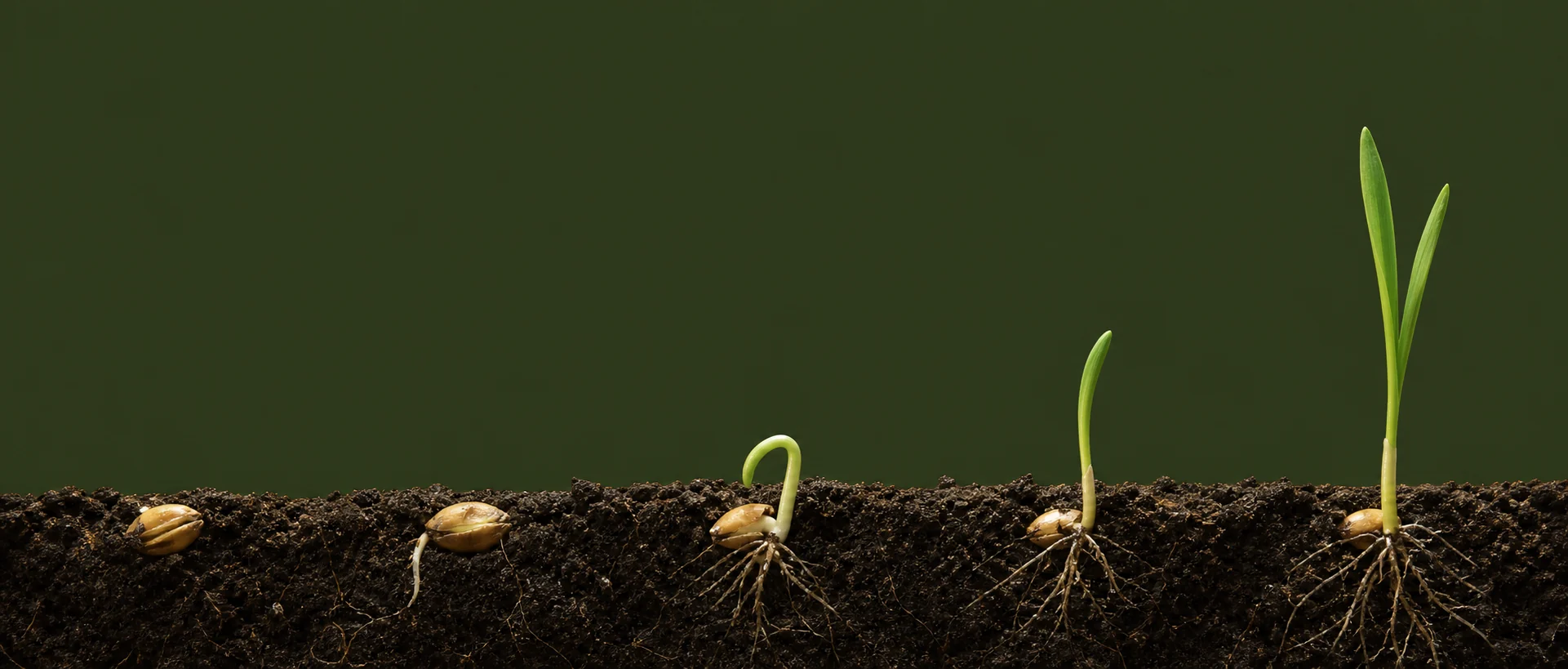
Wheat, barley, canola and many pasture species routinely explore well below ten centimetres when soil allows. In favourable seasons on deep soils, roots chase moisture and nutrients far down the profile. Constraints at twenty, forty or eighty centimetres do not always talk to the surface. A topsoil screen can read "acceptable" while roots hit aluminium toxicity, chloride, boron, or a physical barrier a handspan below your standard depth.
That mismatch is familiar in southern NSW and Victoria dryland systems, on the Darling Downs, through the WA wheatbelt, and in irrigation districts where shallow watertables and salinity move with management. The plant integrates the whole profile. Your portable tool integrates the layer you chose. Both can be true at once.
COMPACTION AND HARD PANS
Compaction is often invisible from the ute window. Header tracks, spray rig tramlines, stock movement on wet ground, and cultivation at the wrong moisture all leave legacy density layers. Roots may branch horizontally above a pan; water may perch and then vanish as runoff on sloping ground. Yield maps that show tramline stripes or persistent low strips along working directions are a hint, not a diagnosis.
A shallow conductivity or moisture screen might show dry surface and moist subsoil on one visit, or the opposite after rain — depending on where water is held. It will not reliably tell you that a pan exists at eighteen centimetres unless you change depth deliberately or correlate with penetration resistance, plant symptoms, or a depth profile from an auger. NSW DPI and GRDC soil compaction resources emphasise mechanical testing and observation of rooting depth over guessing from one surface grab.
When your screening points sit on compacted traffic lines year after year, you are measuring a management artefact as much as a paddock. Name those points honestly ("header track 03", "gateway approach") so you do not merge them mentally with representative mid-slope readings. If traffic compaction is the story, the fix is mechanical or rotational — not something a surface nutrient screen can solve.
ACIDITY AT DEPTH
Australian soil acidity extension has been clear for decades: surface pH can look maintained while subsurface bands remain hostile. Productive agriculture acidifies soil through product removal, nitrogen pathways and related processes. Lime broadcast and left on the surface in no-till systems may improve the top few centimetres while the band below still limits rooting and rhizobia.
Portable pH screening at your standard depth is excellent for spatial pattern and temporal drift at that depth. It is not proof that the profile is safe. If plants show classic acid stress — stunted roots, poor legume nodulation, aluminium-sensitive species failing on rises — and your shallow screen is stable, treat that as a stratification prompt, not as clearance. Laboratory pH in calcium chloride, exchangeable aluminium and cations at defined depth intervals underwrite liming decisions, as soilquality.org.au and state DPI acidity guides describe.
Deliberately screening a second depth at selected points, recorded separately from your standard series, can show whether surface and subsurface diverge. That is still screening, not a full profile, but it beats assuming one number represents the whole column.
SODIC SUBSOILS AND STRUCTURAL COLLAPSE
Sodicity is a subsurface story as often as a surface one. Exchangeable sodium disperses clay, destroys structure when wet, and produces hard, dense layers when dry. Symptoms include poor infiltration, surface sealing, crusting after rain, and crops that struggle in wet starts then die in hot finishes because roots cannot access deep moisture. Electrical conductivity screens can flag salt load at the depth you measure, but sodic soils may not always present as obviously "saline" in the same way as a classic saline scald.
EM38 and related surveys, where available, often pick up clay and moisture architecture in the profile. Yield maps may show chronic poor performance on certain soil types regardless of seasonal break timing. None of that replaces laboratory exchangeable sodium percentage, cations, and ESP on depth samples — but it tells you where to spend auger money.
If you average a sodic low patch into a paddock composite, you dilute the signal and may under-apply gypsum or miss the need entirely. Named points on the worst ground, screened repeatably, keep the hotspot visible in TerraTactics records even when the paddock average looks tame.
CHLORIDE, BORON AND OTHER DEPTH GHOSTS
In drier districts and under irrigation, chloride and boron at depth limit rooting without shouting on a topsoil test. Grapevines, citrus and some broadacre situations each have their own tolerance language in extension factsheets. Screening conductivity at ten centimetres on a rise may miss a chloride lens below. Again: the shallow series flags change and contrast; depth laboratory work prices the constraint.
WHY ZERO TO TEN CENTIMETRE AVERAGES MISLEAD
Composite samples that mix camps, rises, drains and good middle ground were designed for a different era of fertiliser advice. They still appear in some legacy programs. For understanding subsoil constraints, they are actively misleading. You smooth away the very pattern that explains yield.
Even within a uniform-looking paddock, texture transitions from sand to clay loam can sit on one management unit. A single shallow average across that transition tells you almost nothing about where roots fail in the clayey corner. Portable screening at named points exists to preserve that spatial honesty.
WHEN TO DEPTH-SAMPLE WITH AN AUGER
Book structured depth sampling when several lines of evidence converge:
Persistent poor performance in the same zone on yield maps across seasons, not explained by obvious management differences.
Plant symptoms that match extension descriptions of acidity, salinity, sodicity or compaction, while shallow screens at standard depth look unchanged.
EM or soil type maps suggesting a change in clay, salt or moisture holding at depth under your low-yield area.
A shallow screen that suddenly diverges from history at one point — worth checking whether stratification or a new saline seep appeared, not only whether the surface dried out.
Before major capital spend: subsurface drainage, deep ripping, lime incorporation plans, gypsum programs, or buying a block you intend to crop hard.
Your agronomist or consultant will specify intervals — commonly zero to ten, ten to twenty, twenty to thirty centimetres and deeper for perennial problems. TerraTactics does not replace that protocol. It helps you arrive with a map of where the auger should start.
EM SURVEYS AND YIELD MAPS AS HINTS, NOT VERDICTS
Apparent electrical conductivity from ground-based EM instruments responds to clay, moisture, salts and sometimes compaction architecture through the profile, depending on orientation and soil. Yield maps integrate season, variety, disease, frost and soil. Putting EM and yield together often narrows "where to look" faster than either alone.
Use those layers to choose named screening points and auger locations. Do not use them to lime or gypsum from a colour scale. The same discipline applies: screening and mapping find pattern; laboratory and experienced advice underwrite rates.
MOISTURE SCREENS AND SUBSOIL STORYTELLING
Moisture at shallow depth tracks recent rain, cover and evaporation. After a useful break on dryland country, compare how quickly named points wet up and dry down. Persistent slow wetting on sodic or compacted ground can show in contrast to a free-draining neighbour on the same rainfall event — even before you auger. Record ground cover and crust status in the point note so autumn comparisons stay honest.
In irrigation, shallow moisture may look good while deeper layers are saline or waterlogged. Watch plant behaviour and watertable history. Screening stays shallow; investigation goes deep when symptoms demand it.
TERRATACTICS IN A SUBSOIL-AWARE ROUTINE
Keep your standard depth series sacred. Add occasional second-depth observations as separate records when you suspect stratification. Tag points on EM-low-yield overlaps. Upload or note yield map years in the portal when you have them so future you remembers why "North 04" exists.
Upload laboratory PDFs under Lab reports and attach them when you run Soil Analysis on a Grower plan — use that pairing to tell the story of one zone through time, still without asking portable numbers to be what they are not.
TALKING WITH ADVISERS WITHOUT OVERCLAIMING
Say: "These points screen fine at ten centimetres but yield keeps punishing this EM anomaly — what depth suite do you want?" That is a productive conversation. Say: "The probe says the subsoil is sweet" when you never measured below your routine — that is how trust breaks.
Keep the quiet sentence visible: the probe watches the depth you choose; hostile subsoils often live elsewhere; depth sampling decides the fix.
STOCK, TRAFFIC AND MIXED FARMING COMPLICATIONS
Sheep camps, cattle camps and yard approaches enrich topsoil and sometimes hide subsurface issues beneath imported manure and litter. Conversely, long-term cropping without adequate lime may acidify below while camps look lush. Mixed farms need points that represent cropping ground separately from camp edges — a theme developed further in the stock-camps Field Note.
THE COST OF IGNORING DEPTH
Fixing subsurface acidity or sodicity after years of yield leak is slower and dearer than maintenance. Deep ripping without diagnosing sodicity can make things worse. Gypsum on the wrong paddock because a composite masked a hotspot wastes money. Shallow screening done well reduces those failures by keeping spatial and temporal evidence alive until you choose to auger — it does not remove the need to auger when the story points down.
CLOSING DISCIPLINE
Hostile subsoils are normal Australian farming territory, not rare disasters. A shallow portable screen is your repeatable eyes on the layer you standardise — invaluable for moisture, salinity drift, surface acidity and comparing named points. Roots live in the whole profile. Compaction, sodicity, deep acidity and salt lenses routinely evade that shallow view. Use yield and EM hints to choose where depth sampling earns its keep. Use TerraTactics to keep screening honest until laboratory depth work and your agronomist underwrite the spend. That hierarchy protects yield, trust and your wallet.
Portable screening with tools such as TerraProbe is built for repeatable observation in the root zone you can actually reach in the field without a auger crew every week. That is a strength. It is also a boundary. This Field Note explains what a shallow, repeatable screen can honestly tell you, what hostile subsoils do to roots in the real world, and when your own records — plus yield maps, EM surveys, and adviser-led depth sampling — should push the conversation below the depth you screen every visit.
WHAT A SHALLOW SCREEN IS GOOD FOR
A standard screening depth, held steady across seasons at named points, is how you watch the paddock move. Moisture, pH, electrical conductivity, temperature and the other indicators on a consistent depth give you a time series you can trust. You see whether a corner keeps reading differently from its neighbours under similar moisture. You see whether conductivity creeps up after a saline drainage event or whether surface acidity is drifting season on season. GRDC-funded work and state DPI extension on soil acidity, salinity and sodicity all assume that kind of paddock intelligence exists somewhere — usually in someone's memory unless you write it down.
TerraTactics is designed for that job: screening plus repeatable records in the Grower portal, not a replacement for laboratory chemistry and not a prescription for lime, gypsum or fertiliser rates. When you treat the probe as a watchman at fixed points, you build evidence. When you pretend one shallow number describes the whole profile, you set yourself up for expensive surprises.
THE ROOT ZONE IS DEEPER THAN YOUR ROUTINE
Wheat, barley, canola and many pasture species routinely explore well below ten centimetres when soil allows. In favourable seasons on deep soils, roots chase moisture and nutrients far down the profile. Constraints at twenty, forty or eighty centimetres do not always talk to the surface. A topsoil screen can read "acceptable" while roots hit aluminium toxicity, chloride, boron, or a physical barrier a handspan below your standard depth.
That mismatch is familiar in southern NSW and Victoria dryland systems, on the Darling Downs, through the WA wheatbelt, and in irrigation districts where shallow watertables and salinity move with management. The plant integrates the whole profile. Your portable tool integrates the layer you chose. Both can be true at once.
COMPACTION AND HARD PANS
Compaction is often invisible from the ute window. Header tracks, spray rig tramlines, stock movement on wet ground, and cultivation at the wrong moisture all leave legacy density layers. Roots may branch horizontally above a pan; water may perch and then vanish as runoff on sloping ground. Yield maps that show tramline stripes or persistent low strips along working directions are a hint, not a diagnosis.
A shallow conductivity or moisture screen might show dry surface and moist subsoil on one visit, or the opposite after rain — depending on where water is held. It will not reliably tell you that a pan exists at eighteen centimetres unless you change depth deliberately or correlate with penetration resistance, plant symptoms, or a depth profile from an auger. NSW DPI and GRDC soil compaction resources emphasise mechanical testing and observation of rooting depth over guessing from one surface grab.
When your screening points sit on compacted traffic lines year after year, you are measuring a management artefact as much as a paddock. Name those points honestly ("header track 03", "gateway approach") so you do not merge them mentally with representative mid-slope readings. If traffic compaction is the story, the fix is mechanical or rotational — not something a surface nutrient screen can solve.
ACIDITY AT DEPTH
Australian soil acidity extension has been clear for decades: surface pH can look maintained while subsurface bands remain hostile. Productive agriculture acidifies soil through product removal, nitrogen pathways and related processes. Lime broadcast and left on the surface in no-till systems may improve the top few centimetres while the band below still limits rooting and rhizobia.
Portable pH screening at your standard depth is excellent for spatial pattern and temporal drift at that depth. It is not proof that the profile is safe. If plants show classic acid stress — stunted roots, poor legume nodulation, aluminium-sensitive species failing on rises — and your shallow screen is stable, treat that as a stratification prompt, not as clearance. Laboratory pH in calcium chloride, exchangeable aluminium and cations at defined depth intervals underwrite liming decisions, as soilquality.org.au and state DPI acidity guides describe.
Deliberately screening a second depth at selected points, recorded separately from your standard series, can show whether surface and subsurface diverge. That is still screening, not a full profile, but it beats assuming one number represents the whole column.
SODIC SUBSOILS AND STRUCTURAL COLLAPSE
Sodicity is a subsurface story as often as a surface one. Exchangeable sodium disperses clay, destroys structure when wet, and produces hard, dense layers when dry. Symptoms include poor infiltration, surface sealing, crusting after rain, and crops that struggle in wet starts then die in hot finishes because roots cannot access deep moisture. Electrical conductivity screens can flag salt load at the depth you measure, but sodic soils may not always present as obviously "saline" in the same way as a classic saline scald.
EM38 and related surveys, where available, often pick up clay and moisture architecture in the profile. Yield maps may show chronic poor performance on certain soil types regardless of seasonal break timing. None of that replaces laboratory exchangeable sodium percentage, cations, and ESP on depth samples — but it tells you where to spend auger money.
If you average a sodic low patch into a paddock composite, you dilute the signal and may under-apply gypsum or miss the need entirely. Named points on the worst ground, screened repeatably, keep the hotspot visible in TerraTactics records even when the paddock average looks tame.
CHLORIDE, BORON AND OTHER DEPTH GHOSTS
In drier districts and under irrigation, chloride and boron at depth limit rooting without shouting on a topsoil test. Grapevines, citrus and some broadacre situations each have their own tolerance language in extension factsheets. Screening conductivity at ten centimetres on a rise may miss a chloride lens below. Again: the shallow series flags change and contrast; depth laboratory work prices the constraint.
WHY ZERO TO TEN CENTIMETRE AVERAGES MISLEAD
Composite samples that mix camps, rises, drains and good middle ground were designed for a different era of fertiliser advice. They still appear in some legacy programs. For understanding subsoil constraints, they are actively misleading. You smooth away the very pattern that explains yield.
Even within a uniform-looking paddock, texture transitions from sand to clay loam can sit on one management unit. A single shallow average across that transition tells you almost nothing about where roots fail in the clayey corner. Portable screening at named points exists to preserve that spatial honesty.
WHEN TO DEPTH-SAMPLE WITH AN AUGER
Book structured depth sampling when several lines of evidence converge:
Persistent poor performance in the same zone on yield maps across seasons, not explained by obvious management differences.
Plant symptoms that match extension descriptions of acidity, salinity, sodicity or compaction, while shallow screens at standard depth look unchanged.
EM or soil type maps suggesting a change in clay, salt or moisture holding at depth under your low-yield area.
A shallow screen that suddenly diverges from history at one point — worth checking whether stratification or a new saline seep appeared, not only whether the surface dried out.
Before major capital spend: subsurface drainage, deep ripping, lime incorporation plans, gypsum programs, or buying a block you intend to crop hard.
Your agronomist or consultant will specify intervals — commonly zero to ten, ten to twenty, twenty to thirty centimetres and deeper for perennial problems. TerraTactics does not replace that protocol. It helps you arrive with a map of where the auger should start.
EM SURVEYS AND YIELD MAPS AS HINTS, NOT VERDICTS
Apparent electrical conductivity from ground-based EM instruments responds to clay, moisture, salts and sometimes compaction architecture through the profile, depending on orientation and soil. Yield maps integrate season, variety, disease, frost and soil. Putting EM and yield together often narrows "where to look" faster than either alone.
Use those layers to choose named screening points and auger locations. Do not use them to lime or gypsum from a colour scale. The same discipline applies: screening and mapping find pattern; laboratory and experienced advice underwrite rates.
MOISTURE SCREENS AND SUBSOIL STORYTELLING
Moisture at shallow depth tracks recent rain, cover and evaporation. After a useful break on dryland country, compare how quickly named points wet up and dry down. Persistent slow wetting on sodic or compacted ground can show in contrast to a free-draining neighbour on the same rainfall event — even before you auger. Record ground cover and crust status in the point note so autumn comparisons stay honest.
In irrigation, shallow moisture may look good while deeper layers are saline or waterlogged. Watch plant behaviour and watertable history. Screening stays shallow; investigation goes deep when symptoms demand it.
TERRATACTICS IN A SUBSOIL-AWARE ROUTINE
Keep your standard depth series sacred. Add occasional second-depth observations as separate records when you suspect stratification. Tag points on EM-low-yield overlaps. Upload or note yield map years in the portal when you have them so future you remembers why "North 04" exists.
Upload laboratory PDFs under Lab reports and attach them when you run Soil Analysis on a Grower plan — use that pairing to tell the story of one zone through time, still without asking portable numbers to be what they are not.
TALKING WITH ADVISERS WITHOUT OVERCLAIMING
Say: "These points screen fine at ten centimetres but yield keeps punishing this EM anomaly — what depth suite do you want?" That is a productive conversation. Say: "The probe says the subsoil is sweet" when you never measured below your routine — that is how trust breaks.
Keep the quiet sentence visible: the probe watches the depth you choose; hostile subsoils often live elsewhere; depth sampling decides the fix.
STOCK, TRAFFIC AND MIXED FARMING COMPLICATIONS
Sheep camps, cattle camps and yard approaches enrich topsoil and sometimes hide subsurface issues beneath imported manure and litter. Conversely, long-term cropping without adequate lime may acidify below while camps look lush. Mixed farms need points that represent cropping ground separately from camp edges — a theme developed further in the stock-camps Field Note.
THE COST OF IGNORING DEPTH
Fixing subsurface acidity or sodicity after years of yield leak is slower and dearer than maintenance. Deep ripping without diagnosing sodicity can make things worse. Gypsum on the wrong paddock because a composite masked a hotspot wastes money. Shallow screening done well reduces those failures by keeping spatial and temporal evidence alive until you choose to auger — it does not remove the need to auger when the story points down.
CLOSING DISCIPLINE
Hostile subsoils are normal Australian farming territory, not rare disasters. A shallow portable screen is your repeatable eyes on the layer you standardise — invaluable for moisture, salinity drift, surface acidity and comparing named points. Roots live in the whole profile. Compaction, sodicity, deep acidity and salt lenses routinely evade that shallow view. Use yield and EM hints to choose where depth sampling earns its keep. Use TerraTactics to keep screening honest until laboratory depth work and your agronomist underwrite the spend. That hierarchy protects yield, trust and your wallet.
A screening reading is a starting point
TerraTactics readings help you target follow-up sampling. Confirm anything material with
accredited laboratory testing and a qualified local agronomist.
Published 24 July 2026 by David Gilbert