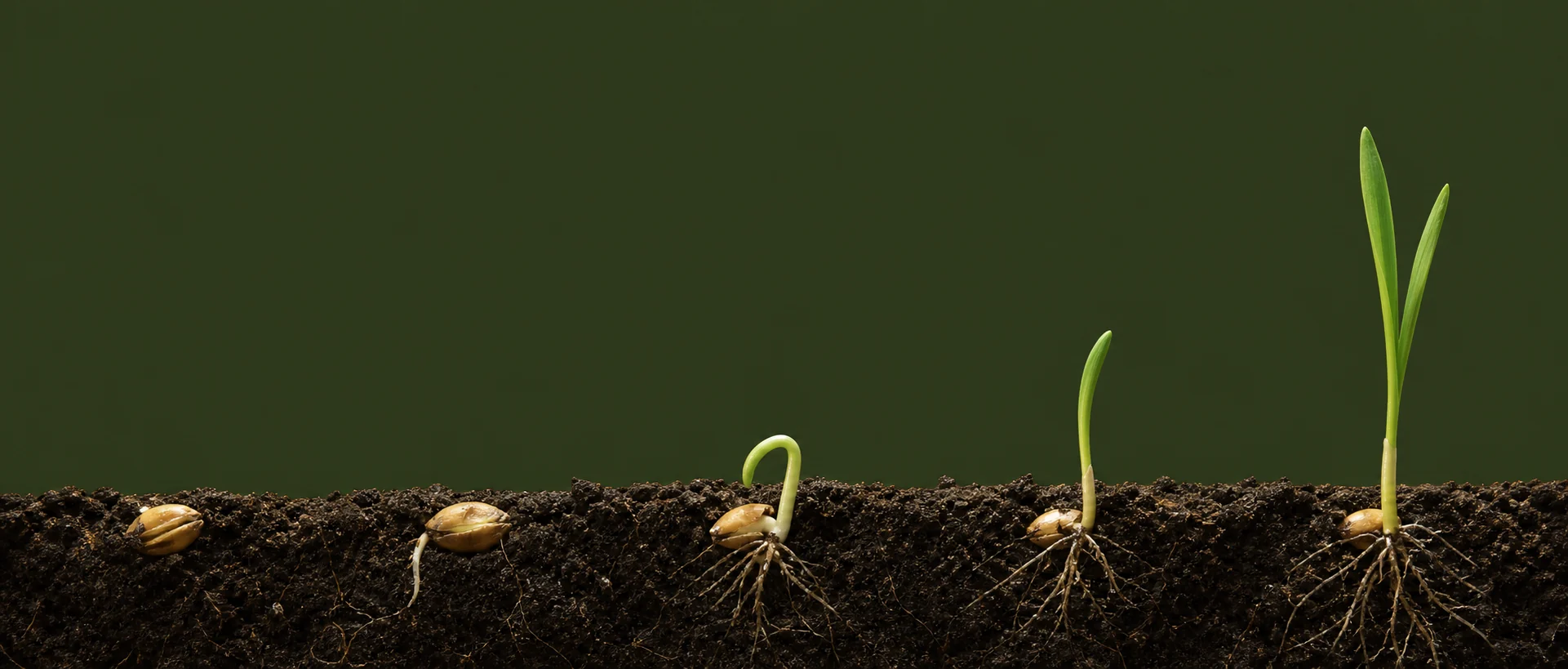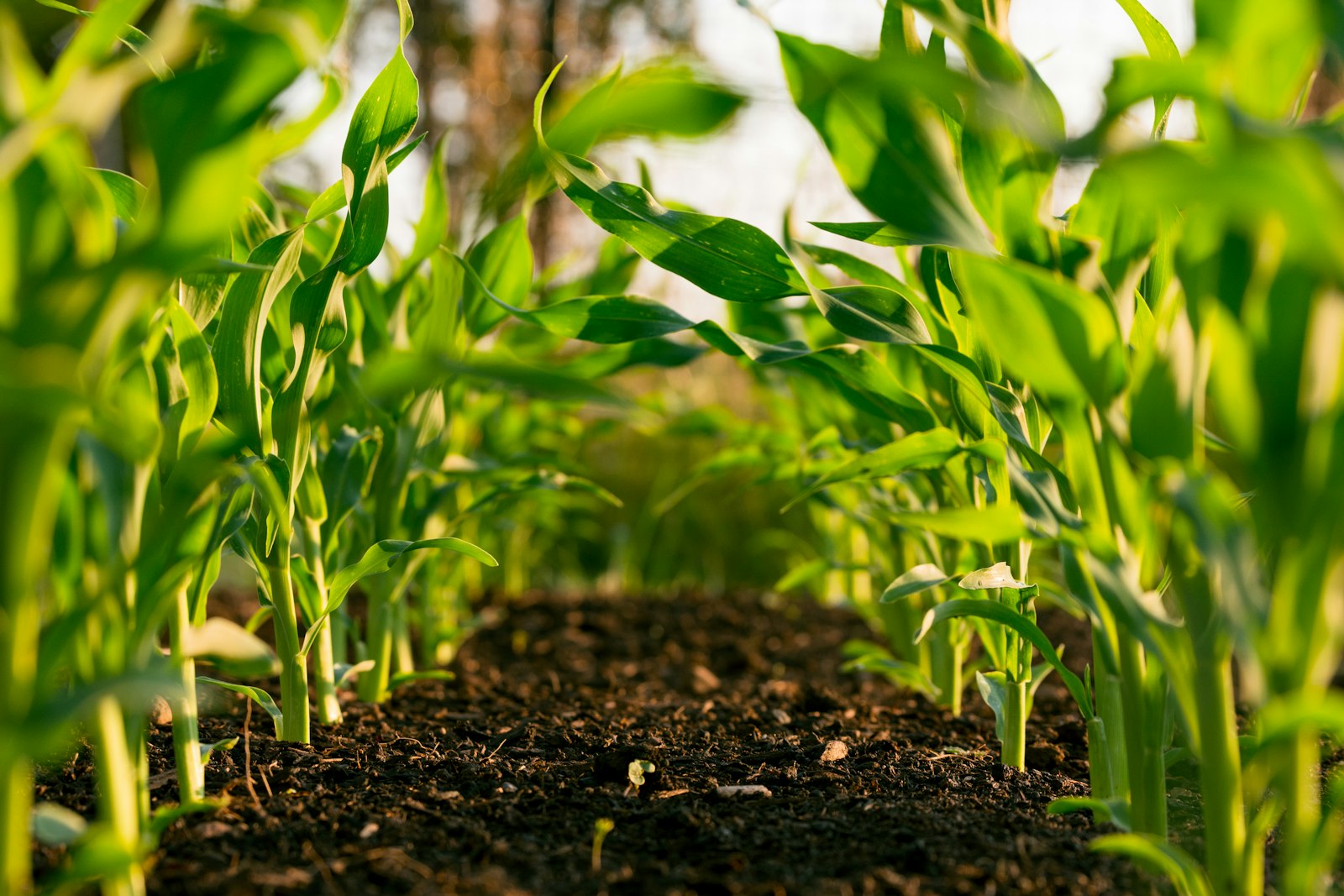
A season-shaped sampling calendar for Australian dryland country — autumn break, pre-sow, in-crop and post-harvest — without turning screening into a second job.
Dryland cropping in Australia runs on a calendar that laboratory soil tests rarely spell out in plain language. The autumn break, the pre-sow rush, the in-crop watch, and the harvest window each offer different moisture, different traffic, and different decisions. A portable screening routine with TerraProbe only pays off when it is tied to that calendar — not when someone grabs random readings between other jobs and wonders why the numbers jump.
This Field Note maps a practical dryland sampling calendar from autumn break through to harvest and post-harvest. It is written for wheat–barley–canola country, mixed farms with pasture phases, and growers who may occasionally fallow or double-crop when moisture allows. Irrigation districts share some logic but have their own scheduling; where irrigation differs, the note says so. TerraTactics provides screening and repeatable records, not fertiliser prescriptions and not a substitute for formal laboratory sampling when rates are decided.
WHY THE CALENDAR MATTERS MORE THAN THE GEAR
Soil indicators move with moisture, temperature, biology and recent management. Compare a screen taken on dust-dry bare ground in January with one taken three days after a forty-millimetre break in May without noting conditions, and you will mostly compare weather. Compare two May visits at the same named points after similar rain, and you may compare paddocks. The calendar is how you line up those honest moments.
GRDC regional grower notes and state DPI seasonal guides repeatedly return to timing: when roots are active, when nitrogen is cycling, when acidity stratification is visible in plant response, when post-harvest is safe for traffic without smearing wet clay. Your portable routine should echo that thinking.
AUTUMN BREAK: FIRST MOISTURE, FIRST STORY
The autumn break — the rainfall event or sequence that wets the seedbed deep enough to consider sowing — is the psychological and agronomic start of the year on much of southern and western dryland country. Timing varies: Anzac Day tradition in some districts, later on the Eyre Peninsula, earlier when subsoil moisture carries over from a kind summer.
In the week after a genuine break, once you can walk paddocks without cutting them up, is a strong window for baseline screening at named points. Moisture has rewetted the surface and upper profile; conductivity and pH comparisons across points are more meaningful than in mid-summer heat. Record millimetres if you know them, ground cover state, and whether the break was gentle or violent enough to seal crusting soils.
What decisions does this pass support?
Choosing which paddocks to crop first if moisture is uneven.
Flagging camps, saline seeps and wet corners that may delay sowing or need varietal or input caution — not rate decisions from the probe alone.
Starting the season's moisture narrative at fixed points you will revisit in-crop.
If the break fails and you fallow, note that in the portal. A fallow year is not a gap in the record; it is a different management state future comparisons need.
PRE-SOW: TRAFFIC, FERTILISER BANDS AND LAST LOOKS
The pre-sow window is busy: burn-offs where used, knockdown sprays, spreading urea or MAP, seeding itself. Screening immediately behind a spreader or on fresh seeding rows measures the pass, not the paddock baseline. Hold your standard routine points away from fresh bands unless you deliberately track band effects.
Two weeks before sowing, or on paddocks already sown early, a pre-sow pass can confirm whether intended points are still reachable and whether moisture at standard depth supports the sowing plan. Legume inoculation and acidity worries often surface here in conversation with advisers; portable pH series from prior seasons is evidence, not a lime rate.
What decisions does this pass support?
Confirming representative points before traffic makes them unreachable until harvest.
Handing your agronomist a consistent pre-sow moisture and conductivity context at named locations.
Noticing if a corner that always screens odd is still odd before you invest the season's seed and fertiliser in that unit — prompting targeted laboratory or depth work if needed.
Avoid sampling compacted headlands during the one day the whole farm is on them. Calendar discipline includes saying no to bad moments.
IN-CROP: WATCHING THE SEASON UNFOLD
In-crop screening is where repeatable records earn their keep. Visits at tillering, stem elongation, and grain fill — three is enough for many farms — should hit the same named points at the same depth. Match moisture context where possible: a few days after rain rather than at peak heat on cracking clay.
Dry finishes show up in moisture screens at your standard depth before the crop looks terrible from the road. Wet winters on sodic ground may show conductivity shifts at points you already flagged in autumn. None of that replaces tissue tests or disease inspection, but it links soil change to crop timing.
What decisions does this pass support?
Irrigation scheduling is rarely the main dryland story, but identifying where subsoil moisture is failing early informs hay-off, grazing, or salvage decisions on mixed farms.
Explaining yield variation at harvest when you revisit the same points post-harvest with a season of notes attached.
Deciding whether a disappointing year was uniformly tough or spatially patterned — the latter deserves map and auger follow-up.
Do not treat in-crop nutrient screens as top-dress authority. Australian advisers use laboratory and crop rules for that. TerraTactics keeps the paddock conversation honest between formal tests.
HARVEST AND POST-HARVEST: RESidue, COMPACTION AND RESET
Harvest is the worst time for standard screening on traffic lines — and the best time to note where the header lived. Post-harvest, once soils have dried enough to avoid compaction, is underrated for dryland records. Stubble cover changes infiltration for the next break. Sheep on stubbles change surface fertility and compaction on camps.
Schedule a post-harvest pass when:
Ground supports the ute without rutting.
You can still see stubble amount and whether wind or grazing stripped cover.
You are planning lime, gypsum, deep ripping or pasture sowing for the coming year.
What decisions does this pass support?
Lime and gypsum timing conversations with advisers for summer application windows.
Choosing pasture species or cover crops on paddocks whose screening history shows salt or acidity drift.
Setting up autumn baseline comparisons for next season — the record is continuous, not yearly amnesia.
If you graze stubbles hard, note stock class and duration at each point. Mixed farms that crop and graze the same unit need that context or autumn moisture will mislead next year.
MOISTURE WINDOWS IN PLAIN LANGUAGE
Dryland moisture windows worth remembering:
After a break when the profile is wetting but not waterlogged — baseline and autumn comparisons.
Mid-fallow on long fallow paddocks — watch salinity creep on rises, not for instant fertiliser response.
In-crop after rain events of roughly fifteen millimetres and up on your soil type — compare points, not absolute numbers to textbook ideals.
Post-harvest before summer heat — stubble and moisture at standard depth foreshadow next break behaviour.
Avoid: frozen or frosted mornings for pH comparison obsession; mud immediately after flooding; the hour after urea spread; paddocks still smoking from windrow burn.
Temperature belongs in notes. Cold soils slow biology; hot dry soils exaggerate surface dryness. TerraTactics temperature alongside moisture helps advisers interpret a single visit.
PASTURE PHASES AND MIXED FARMING
When a paddock returns to pasture, keep the named points if stock do not destroy them. Pasture roots change organic matter and acidity near the surface over years. A screening series that crosses crop and pasture phases is gold — if you label phase changes in the Grower portal.
Sheep camps during pasture rest paddocks create hotspots that must not be averaged into "the paddock". Sample camps as named points or avoid them for representative readings — detailed in the stock-camps Field Note.
FALLOW, DOUBLE-CROP AND OPPORTUNISTIC MOISTURE
Long fallow accumulates moisture and sometimes salt on heavy soils. Screening at fallow mid-point and pre-sow captures that arc. Opportunistic summer crop after a wet winter uses the same calendar shifted forward: post-harvest of winter crop, pre-sow of summer, in-crop after storm rain.
THE YEAR ON ONE PAGE
Many growers pin this to the shed wall:
Autumn break plus seven to fourteen days: baseline named points, full indicator set, cover and rain notes.
Pre-sow minus seven to fourteen days: repeat if break was early; confirm points; avoid fresh fertiliser bands.
In-crop: two to three visits aligned to rain where possible.
Post-harvest: stubble state, moisture, conductivity drift check before summer.
Optional: mid-fallow on long fallow only.
That is fewer than a dozen days of field work if points are marked — not a second farm business.
WHAT NOT TO ASK EACH PASS TO DO
No pass should set lime, gypsum or fertiliser rates alone. No pass replaces plant inspection. No pass proves subsoil chemistry without depth sampling when symptoms demand it. TerraTactics screening at each calendar stop is watchful repetition — the agronomic decisions stay with you, your adviser, and the laboratory at the right time.
IRRIGATION DISTRICTS: ADJUST ONE STEP
Where irrigation applies, pre-sow and in-crop passes often follow irrigation sets rather than rain. Record set completion date and hours where relevant. Salinity and watertable management may need more frequent conductivity context at fixed points — still with matched post-set moisture notes. The autumn break language may translate to "first full profile wet-up" after winter drainage.
RECORDS THAT SURVIVE THE CALENDAR
For each visit: point name, depth, seven indicators, moisture words, rain or irrigation, crop phase or stubble, stock if present. TerraTactics Field Intelligence GPS helps relocate points; names help humans. When laboratory reports arrive for a decision point, link dates in notes so the calendar story stays one thread.
TALKING TO AGRONOMISTS WITH A SEASON ATTACHED
Bring the year as a table: break date, visits, odd points. Ask: "North 02 moisture dropped faster than West 01 every in-crop pass — worth auger on the rise?" That beats a single number on a sticky note. Advisers in GRDC networks and private practice are used to seasonal narrative; give them one.
REGIONAL DIFFERENCES WITHOUT OVERCOMPLICATING
Northern NSW and Queensland summer rainfall country may shift the calendar toward winter crop sowing after stored moisture rather than a classic southern break narrative — the same discipline applies: name points, note rain that mattered, avoid sampling immediately after storm runoff on bare ground. Eyre Peninsula and Mallee growers often carry subsoil moisture; autumn baseline may look dry at ten centimetres while deeper layers still carry — your moisture screen is shallow by design, so note "subsoil carry suspected" when you know it from auger history. Tasmania and high-rainfall zones may have more in-crop windows; do not skip post-harvest because grass grows — cover notes still matter for next crop entry.
WEATHER EXTREMES AND WHEN TO SKIP A VISIT
Flooded paddocks, hail-stripped crops, and fire-affected stubbles are legitimate reasons to skip a standard visit and log why. A screen taken through ash or anaerobic mud after two weeks underwater is data you will regret. Resume the calendar when traffic and soil structure allow representative contact at standard depth. Extremes belong in the portal narrative so advisers do not misread a gap as neglect.
WHO DOES THE WORK
On family farms, assign one person the calendar responsibility so depth and point names stay consistent when someone else fills in during seeding. Contractors can sample if they follow your written SOP — otherwise their numbers belong in a separate file, not merged with yours. TerraTactics records are most valuable when the same hands hold the probe year on year.
ALIGNING WITH FORMAL SOIL TEST YEARS
Many farms still run a three- or four-year laboratory grid. Portable screening fills the seasons between; it does not need to happen on the same day as auger sampling. When formal tests are booked, note the date on nearby named probe points so advisers can relate lab rows to your in-season moisture or conductivity story without assuming they measure the same depth or volume.
CLOSING
A dryland sampling calendar is not bureaucracy. It is how repeatable screening beats random noise. Tie TerraTactics visits to autumn break, pre-sow, in-crop and post-harvest windows with honest moisture context. Each pass supports different decisions — sowing order, in-season explanation, and post-harvest remediation planning — without pretending portable numbers are prescriptions. Hold the method still; let the seasons move; auger and lab when the calendar of evidence says go deeper.
This Field Note maps a practical dryland sampling calendar from autumn break through to harvest and post-harvest. It is written for wheat–barley–canola country, mixed farms with pasture phases, and growers who may occasionally fallow or double-crop when moisture allows. Irrigation districts share some logic but have their own scheduling; where irrigation differs, the note says so. TerraTactics provides screening and repeatable records, not fertiliser prescriptions and not a substitute for formal laboratory sampling when rates are decided.
WHY THE CALENDAR MATTERS MORE THAN THE GEAR
Soil indicators move with moisture, temperature, biology and recent management. Compare a screen taken on dust-dry bare ground in January with one taken three days after a forty-millimetre break in May without noting conditions, and you will mostly compare weather. Compare two May visits at the same named points after similar rain, and you may compare paddocks. The calendar is how you line up those honest moments.
GRDC regional grower notes and state DPI seasonal guides repeatedly return to timing: when roots are active, when nitrogen is cycling, when acidity stratification is visible in plant response, when post-harvest is safe for traffic without smearing wet clay. Your portable routine should echo that thinking.
AUTUMN BREAK: FIRST MOISTURE, FIRST STORY
The autumn break — the rainfall event or sequence that wets the seedbed deep enough to consider sowing — is the psychological and agronomic start of the year on much of southern and western dryland country. Timing varies: Anzac Day tradition in some districts, later on the Eyre Peninsula, earlier when subsoil moisture carries over from a kind summer.
In the week after a genuine break, once you can walk paddocks without cutting them up, is a strong window for baseline screening at named points. Moisture has rewetted the surface and upper profile; conductivity and pH comparisons across points are more meaningful than in mid-summer heat. Record millimetres if you know them, ground cover state, and whether the break was gentle or violent enough to seal crusting soils.
What decisions does this pass support?
Choosing which paddocks to crop first if moisture is uneven.
Flagging camps, saline seeps and wet corners that may delay sowing or need varietal or input caution — not rate decisions from the probe alone.
Starting the season's moisture narrative at fixed points you will revisit in-crop.
If the break fails and you fallow, note that in the portal. A fallow year is not a gap in the record; it is a different management state future comparisons need.
PRE-SOW: TRAFFIC, FERTILISER BANDS AND LAST LOOKS
The pre-sow window is busy: burn-offs where used, knockdown sprays, spreading urea or MAP, seeding itself. Screening immediately behind a spreader or on fresh seeding rows measures the pass, not the paddock baseline. Hold your standard routine points away from fresh bands unless you deliberately track band effects.
Two weeks before sowing, or on paddocks already sown early, a pre-sow pass can confirm whether intended points are still reachable and whether moisture at standard depth supports the sowing plan. Legume inoculation and acidity worries often surface here in conversation with advisers; portable pH series from prior seasons is evidence, not a lime rate.
What decisions does this pass support?
Confirming representative points before traffic makes them unreachable until harvest.
Handing your agronomist a consistent pre-sow moisture and conductivity context at named locations.
Noticing if a corner that always screens odd is still odd before you invest the season's seed and fertiliser in that unit — prompting targeted laboratory or depth work if needed.
Avoid sampling compacted headlands during the one day the whole farm is on them. Calendar discipline includes saying no to bad moments.
IN-CROP: WATCHING THE SEASON UNFOLD
In-crop screening is where repeatable records earn their keep. Visits at tillering, stem elongation, and grain fill — three is enough for many farms — should hit the same named points at the same depth. Match moisture context where possible: a few days after rain rather than at peak heat on cracking clay.
Dry finishes show up in moisture screens at your standard depth before the crop looks terrible from the road. Wet winters on sodic ground may show conductivity shifts at points you already flagged in autumn. None of that replaces tissue tests or disease inspection, but it links soil change to crop timing.
What decisions does this pass support?
Irrigation scheduling is rarely the main dryland story, but identifying where subsoil moisture is failing early informs hay-off, grazing, or salvage decisions on mixed farms.
Explaining yield variation at harvest when you revisit the same points post-harvest with a season of notes attached.
Deciding whether a disappointing year was uniformly tough or spatially patterned — the latter deserves map and auger follow-up.
Do not treat in-crop nutrient screens as top-dress authority. Australian advisers use laboratory and crop rules for that. TerraTactics keeps the paddock conversation honest between formal tests.
HARVEST AND POST-HARVEST: RESidue, COMPACTION AND RESET
Harvest is the worst time for standard screening on traffic lines — and the best time to note where the header lived. Post-harvest, once soils have dried enough to avoid compaction, is underrated for dryland records. Stubble cover changes infiltration for the next break. Sheep on stubbles change surface fertility and compaction on camps.
Schedule a post-harvest pass when:
Ground supports the ute without rutting.
You can still see stubble amount and whether wind or grazing stripped cover.
You are planning lime, gypsum, deep ripping or pasture sowing for the coming year.
What decisions does this pass support?
Lime and gypsum timing conversations with advisers for summer application windows.
Choosing pasture species or cover crops on paddocks whose screening history shows salt or acidity drift.
Setting up autumn baseline comparisons for next season — the record is continuous, not yearly amnesia.
If you graze stubbles hard, note stock class and duration at each point. Mixed farms that crop and graze the same unit need that context or autumn moisture will mislead next year.
MOISTURE WINDOWS IN PLAIN LANGUAGE
Dryland moisture windows worth remembering:
After a break when the profile is wetting but not waterlogged — baseline and autumn comparisons.
Mid-fallow on long fallow paddocks — watch salinity creep on rises, not for instant fertiliser response.
In-crop after rain events of roughly fifteen millimetres and up on your soil type — compare points, not absolute numbers to textbook ideals.
Post-harvest before summer heat — stubble and moisture at standard depth foreshadow next break behaviour.
Avoid: frozen or frosted mornings for pH comparison obsession; mud immediately after flooding; the hour after urea spread; paddocks still smoking from windrow burn.
Temperature belongs in notes. Cold soils slow biology; hot dry soils exaggerate surface dryness. TerraTactics temperature alongside moisture helps advisers interpret a single visit.
PASTURE PHASES AND MIXED FARMING
When a paddock returns to pasture, keep the named points if stock do not destroy them. Pasture roots change organic matter and acidity near the surface over years. A screening series that crosses crop and pasture phases is gold — if you label phase changes in the Grower portal.
Sheep camps during pasture rest paddocks create hotspots that must not be averaged into "the paddock". Sample camps as named points or avoid them for representative readings — detailed in the stock-camps Field Note.
FALLOW, DOUBLE-CROP AND OPPORTUNISTIC MOISTURE
Long fallow accumulates moisture and sometimes salt on heavy soils. Screening at fallow mid-point and pre-sow captures that arc. Opportunistic summer crop after a wet winter uses the same calendar shifted forward: post-harvest of winter crop, pre-sow of summer, in-crop after storm rain.
THE YEAR ON ONE PAGE
Many growers pin this to the shed wall:
Autumn break plus seven to fourteen days: baseline named points, full indicator set, cover and rain notes.
Pre-sow minus seven to fourteen days: repeat if break was early; confirm points; avoid fresh fertiliser bands.
In-crop: two to three visits aligned to rain where possible.
Post-harvest: stubble state, moisture, conductivity drift check before summer.
Optional: mid-fallow on long fallow only.
That is fewer than a dozen days of field work if points are marked — not a second farm business.
WHAT NOT TO ASK EACH PASS TO DO
No pass should set lime, gypsum or fertiliser rates alone. No pass replaces plant inspection. No pass proves subsoil chemistry without depth sampling when symptoms demand it. TerraTactics screening at each calendar stop is watchful repetition — the agronomic decisions stay with you, your adviser, and the laboratory at the right time.
IRRIGATION DISTRICTS: ADJUST ONE STEP
Where irrigation applies, pre-sow and in-crop passes often follow irrigation sets rather than rain. Record set completion date and hours where relevant. Salinity and watertable management may need more frequent conductivity context at fixed points — still with matched post-set moisture notes. The autumn break language may translate to "first full profile wet-up" after winter drainage.
RECORDS THAT SURVIVE THE CALENDAR
For each visit: point name, depth, seven indicators, moisture words, rain or irrigation, crop phase or stubble, stock if present. TerraTactics Field Intelligence GPS helps relocate points; names help humans. When laboratory reports arrive for a decision point, link dates in notes so the calendar story stays one thread.
TALKING TO AGRONOMISTS WITH A SEASON ATTACHED
Bring the year as a table: break date, visits, odd points. Ask: "North 02 moisture dropped faster than West 01 every in-crop pass — worth auger on the rise?" That beats a single number on a sticky note. Advisers in GRDC networks and private practice are used to seasonal narrative; give them one.
REGIONAL DIFFERENCES WITHOUT OVERCOMPLICATING
Northern NSW and Queensland summer rainfall country may shift the calendar toward winter crop sowing after stored moisture rather than a classic southern break narrative — the same discipline applies: name points, note rain that mattered, avoid sampling immediately after storm runoff on bare ground. Eyre Peninsula and Mallee growers often carry subsoil moisture; autumn baseline may look dry at ten centimetres while deeper layers still carry — your moisture screen is shallow by design, so note "subsoil carry suspected" when you know it from auger history. Tasmania and high-rainfall zones may have more in-crop windows; do not skip post-harvest because grass grows — cover notes still matter for next crop entry.
WEATHER EXTREMES AND WHEN TO SKIP A VISIT
Flooded paddocks, hail-stripped crops, and fire-affected stubbles are legitimate reasons to skip a standard visit and log why. A screen taken through ash or anaerobic mud after two weeks underwater is data you will regret. Resume the calendar when traffic and soil structure allow representative contact at standard depth. Extremes belong in the portal narrative so advisers do not misread a gap as neglect.
WHO DOES THE WORK
On family farms, assign one person the calendar responsibility so depth and point names stay consistent when someone else fills in during seeding. Contractors can sample if they follow your written SOP — otherwise their numbers belong in a separate file, not merged with yours. TerraTactics records are most valuable when the same hands hold the probe year on year.
ALIGNING WITH FORMAL SOIL TEST YEARS
Many farms still run a three- or four-year laboratory grid. Portable screening fills the seasons between; it does not need to happen on the same day as auger sampling. When formal tests are booked, note the date on nearby named probe points so advisers can relate lab rows to your in-season moisture or conductivity story without assuming they measure the same depth or volume.
CLOSING
A dryland sampling calendar is not bureaucracy. It is how repeatable screening beats random noise. Tie TerraTactics visits to autumn break, pre-sow, in-crop and post-harvest windows with honest moisture context. Each pass supports different decisions — sowing order, in-season explanation, and post-harvest remediation planning — without pretending portable numbers are prescriptions. Hold the method still; let the seasons move; auger and lab when the calendar of evidence says go deeper.
A screening reading is a starting point
TerraTactics readings help you target follow-up sampling. Confirm anything material with
accredited laboratory testing and a qualified local agronomist.
Published 20 July 2026 by David Gilbert