Nodulation often fails before the host plant looks sick. Why Australian acid soils punish legumes early — and how screening then laboratory work catches it.
Legumes quit quietly on acid soils. The crop may still look green for a while. Pasture mixes keep a grass cover. Nodules fail or shrink. Fixed nitrogen slips out of the system. By the time someone says “we need more fertiliser nitrogen”, the cheaper fix might have been lime, inoculant choice, or both — months earlier. In much of Australia’s cropping and grazing country, acidity and rhizobia sensitivity are part of that silent story.
This Field Note explains why rhizobia fail before host plants show classic deficiency symptoms, how that shows up in mixed farms, and where portable soil screening with TerraProbe fits before laboratory pH, aluminium and inoculant decisions. TerraTactics screens and records; it does not replace rhizobia assays, lime rates or agronomic prescriptions.
ACIDITY IS AN AUSTRALIAN MAINTENANCE JOB
Soil acidification follows productive agriculture: product removal, nitrogen cycles, leaching in high-rainfall zones, and sometimes acidifying fertilisers used heavily without matching alkalinity inputs. NSW DPI and related soilquality.org.au material describe technical acidity in calcium chloride terms and emphasise subsurface bands — not just the surface scrape. Aluminium becomes more soluble as pH falls, damaging roots before pH “looks terrible” on a casual check.
Farmers know the headline species: lucerne, medics, chickpeas, some barley lines, sensitive clovers. The quieter failure is nodulation on subclover and serradella in pasture, or soybeans on a rise that never got maintenance lime. Screening pH at named points across rises and flats finds pattern early. It does not tell you lime rate — laboratory CaCl₂ pH, cations and exchangeable aluminium do.
WHAT RHIZOBIA NEED THAT PLANTS HIDE
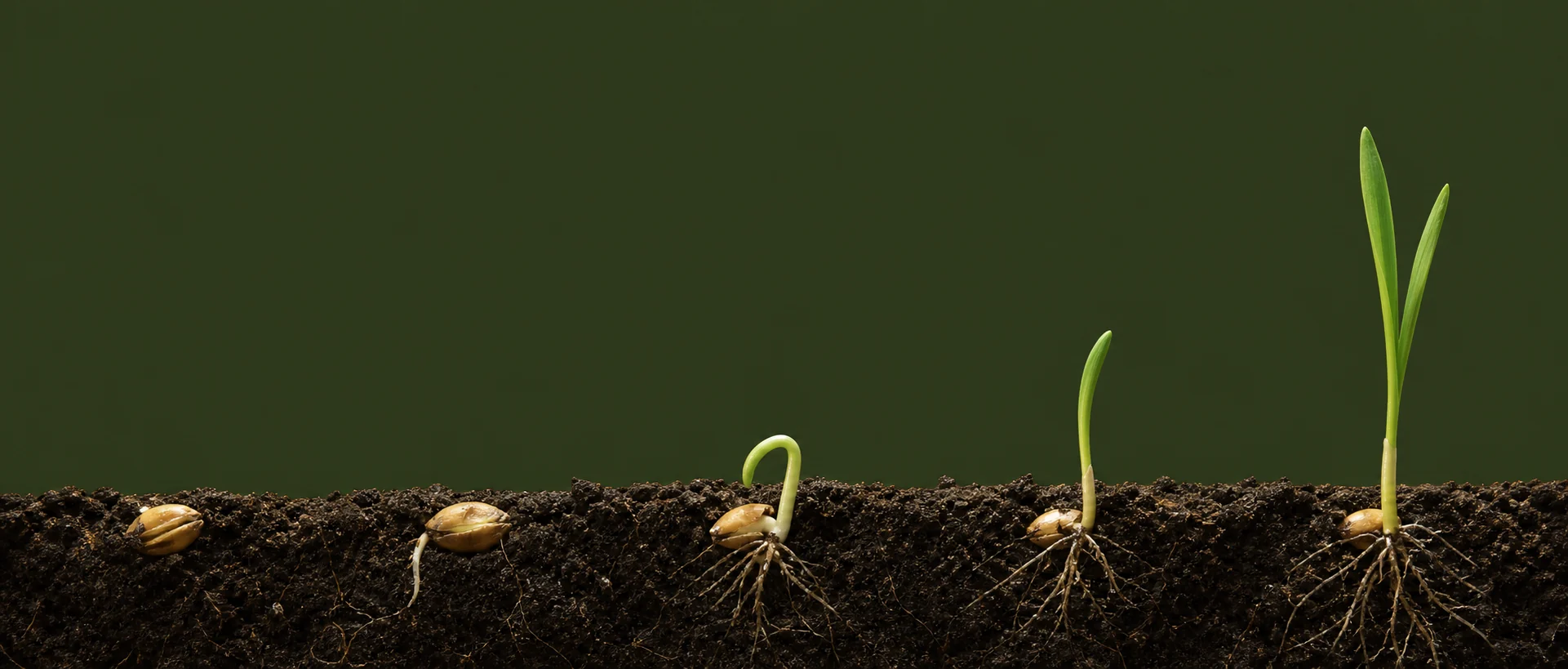
Rhizobia are living partners, not fertiliser bags. Each legume group matches specific strains. Those bacteria must survive in soil between hosts, infect root hairs, form nodules, and fix nitrogen under soil conditions that suit them — not only under conditions that suit the crop.
Low pH directly stresses many rhizobia. Aluminium and manganese toxicity in the root zone can reduce infection even when top growth still passes a drive-by inspection. Moisture stress and heat add insult during establishment — common in Australian springs — but if pH was already marginal, the legume was living on borrowed time.
Symptoms of poor nodulation overlap with everything else: pale lower leaves, slow growth, weed invasion, higher reliance on soil nitrogen. Growers often increase urea before they pull a plant and count nodules. By then the season’s nitrogen contribution is gone.
Screening will not count nodules. It will tell you whether the same paddock corner keeps reading lower pH than its neighbours under honest moisture — a reason to dig plants, check nodulation, and book laboratory acidity work before you blame the inoculant batch alone.
PASTURE LEGUMES VERSUS CROP LEGUMES
Pasture systems run multi-year clocks. A subclover phase on acid rises slowly thins; grasses dominate; animal performance softens without a single catastrophic year. Because pasture is not sold as tonnes per hectare, the signal is easy to miss. Named screening points on rises, in old camps, and on limed versus unlimed strips give a time series that pasture walks alone rarely quantify.
Crop legumes compress the clock into one establishment window. Chickpeas, lentils, faba beans, lupins and soybeans each carry different acidity and aluminium tolerance discussions with advisers. A field that “always does okay on wheat” can still murder a sensitive legume on the same pH because wheat is not the canary.
Mixed farms should not assume one paddock average. Screen points where legumes actually run — not only where cereals ran last year.
INOCULANT QUALITY VERSUS SOIL HOSTILITY
Bad inoculant happens. So does good inoculant on hostile soil. The diagnostic order matters: know soil pH trend at the point, inspect nodulation on representative plants, review inoculant storage and application, then laboratory soil chemistry for aluminium and pH in the root zone depth.
Peat slurry on seed, granular in-furrow, and on-furrow applications each fail differently when soil is dry, hot, or acid at the seed zone. Screening at sowing depth — recorded as depth every time — gives context for “inoculant failure” claims.
Rhizobia persistence between crops is real on some soils and fiction on others. Maintenance lime that lifts surface pH helps bacteria as well as roots. A one-off lime without follow-up screens can leave you thinking the problem was inoculant when acidity drifted back.
NITROGEN FIXATION AS A FARM OUTPUT
Fixed nitrogen is yield, protein, and feed quality translated into dollars without a fertiliser invoice — until it stops. When legumes fail to fix, the replacement cost shows up as higher nitrogen fertiliser, lower wheat protein, or lower stocking rate. That is farm business language, not microbiology jargon.
Multi-year TerraTactics records at legume paddock points support conversations with bankers and successors: we watched acidity creep on the rise before medic failed; we limed and screened the response; laboratory checks confirmed movement. That is asset documentation, not a prescription record.
SCREENING THEN LAB: A PRACTICAL SEQUENCE
1. Name points on rises, mid-slope and any historical legume failure zones. Fix depth; note moisture.
2. Screen pH and companion indicators (conductivity matters where salt and acidity co-exist). Look for points consistently below the paddock’s own baseline, and for multi-season drift.
3. When legume performance slips or nodulation looks poor on inspection, escalate — do not lime from the screen alone. Laboratory CaCl₂ pH, aluminium, and depth-stratified sampling as your adviser specifies.
4. Align lime and inoculant decisions with species. Some crops tolerate lower pH longer; some rhizobia strains are chosen for acid tolerance — still within limits.
5. After lime or amendment, keep screening the same points. Laboratory follow-up confirms what maintenance achieved.
6. Record crop, cultivar, inoculant type and sowing date beside screens. Future you will need that chain.
ALUMINIUM WITHOUT GUESSING
Exchangeable aluminium is the laboratory conversation screening cannot finish. Extension material pairs low pH with aluminium toxicity for sensitive roots and rhizobia. If plants are stunted but a surface kit reads “acceptable”, suspect stratification — acid and aluminium below your standard depth. Deliberate second-depth checks or stratified lab samples follow, not deeper guessing with the same method unrecorded.
STRATIFICATION AND NO-TILL
No-till and minimum till conserve moisture and structure but can leave acidity bands where fertiliser and residue interact. Legumes seeded into apparently fine surface conditions hit hostile layers at rooting depth. Yield maps will not nod. Points will, if depth is honest and revisited.
MOISTURE AND SEASONAL NOISE
Dry sampling and wet sampling shift field pH and conductivity. Compare seasons with moisture notes. A wet year can mask acidity symptoms in biomass while screens still trend low — another reason records beat memory.
TERRATACTICS ROLE
TerraProbe includes pH among seven screening indicators, captured at named points with GPS assist and offline-capable Android workflow. The Grower portal holds charts paddock notes and point notes. Optional TerraTactics Soil Analysis on Grower plans helps summarise screening change — insight for advisers, not a lime calculator or inoculant recommendation engine.
FOR AGRONOMISTS
Use legume quiet failure as an ethics lesson. Show a paddock rise with low screens next to a limed headland with stable screens. Connect to nodulation checks and laboratory aluminium. Never claim the probe replaces rhizobia testing or lime rate models.
On mixed livestock and crop country, mention pasture time horizons — second and third year of records matter more than a single visit.
CROP ROTATION MEMORY AND LEGUME DEBT
Many wheat-canola rotations treat legumes as a rare break crop rather than a nitrogen engine. When faba beans or chickpeas underperform once, growers sometimes drop legumes for a decade and buy nitrogen instead. The farm forgets whether failure was frost, disease, inoculant storage, or acidity on the rise. Point records with rotation tags prevent that amnesia. If medic screens drift low across three pasture years while urea on following wheat rises, the rotation is telling you something economics alone will not.
Lupins on sand plains and soybeans in coastal valleys carry different adviser conversations, but the quiet rhizobia story rhymes: establishment is the audition, nodulation is the contract, and soil pH is the venue. If the venue was acid, blaming the band for a bad show misses the point.
LIME PLACEMENT, TIMING AND LEGUME WINDOWS
Maintenance lime broadcast on pasture does not always move subsurface acidity on the schedule legumes need. Incorporation, product quality, and rainfall after application interact with when you sow the next sensitive crop. Screening after lime at the same points — with laboratory anchors at major decisions — shows whether the treated zone is responding relative to untreated neighbours. It will not replace a liming model; it keeps you from sowing lucerne into a rise that still screens low two seasons after a “we limed that paddock” conversation.
Where aluminium is in play, liming targets are discussed in CaCl₂ terms with advisers who know local buffer capacity. Field screens that stabilise after lime are encouragement to keep maintenance; screens that keep falling are a prompt to revisit depth sampling before another legume gamble.
WORKING WITH YOUR AGRONOMIST ON NODULATION CHECKS
Pull plants at multiple growth stages when performance looks flat: cotyledon to first node for crops, early vegetative for pasture mixes. Count nodules, note colour and location, and sample from rises and flats separately if screens differ. Bring screen history, moisture notes, and inoculant batch details to that meeting. The agronomist is not guessing whether acidity might matter; they are interpreting biology on ground you already mapped with repeatable method.
If laboratory work shows aluminium or low CaCl₂ pH, discuss species tolerance, alternative rhizobia strains where appropriate, and whether the next wheat crop should carry lime capital instead of another legume retry on unchanged soil.
RECORDS FOR MIXED LIVESTOCK AND CROPPING
Enterprises that graze then crop the same block face legume failure in pasture years and wonder why chickpeas struggle afterward. Compaction, pH drift, and salt from stock camps each leave signatures screening can separate when points are named at camps, transects, and clean crop areas. TerraTactics notes like “sheep camp edge” beside conductivity or pH screens help successors understand why the gate corner always grows weeds — not mysticism, soil pattern.
FOR GROWERS NEW TO SCREENING
Start on the paddock where legumes last disappointed. Three points, one depth, moisture recorded, pH and companion indicators saved in the Grower portal. One season is learning; three seasons is evidence. Do not lime from the first low reading. Do dig plants and book laboratory work when the same point stays low under matched moisture across two visits.
FERTILISER NITROGEN MASKING THE FIX
Urea and other nitrogen sources can green a legume failure long enough to hide nodulation loss until the bill repeats every year. When nitrogen spend creeps on paddocks that once relied on medic or crop legumes, ask whether soil partners failed first. Screening history beside fertiliser records tells that story in board meetings without blaming the season alone.
THE ONE SENTENCE WORTH PRACTISING
Laboratory CaCl₂ pH and aluminium decide lime; rhizobia strain and inoculant quality decide the biological package; the probe and named points decide where to look and whether drift is real. Keep that sentence in the record. It prevents screening technology being treated as magic and keeps the required laboratory step visible.
WINTER CLEANUP AND SUMMER SCOUTING
Southern region growers often scout legume pastures after the break when medic should be nodulating on wet rises. A quick screen at the same points you will use pre-sow on the following cereal gives continuity through the rotation. Northern growers watch mungbean and soybean establishment heat — screen early if history says the rise is acid, but still send stratified samples to the lab before you rewrite the whole program.
BOTTOM LINE
On Australian acid soils, rhizobia often fail before legumes look obviously sick. Nitrogen fixation slips away; grasses and cereals mask the gap until inputs rise. Repeatable pH screening at named points finds where acidity drift and aluminium risk deserve laboratory work before you blame inoculant or weather alone. Lime rates and strain choices stay with advisers and lab chemistry. Screening gets you early, keeps the paddock story honest, and supports better legume decisions without pretending to be the laboratory.
This Field Note explains why rhizobia fail before host plants show classic deficiency symptoms, how that shows up in mixed farms, and where portable soil screening with TerraProbe fits before laboratory pH, aluminium and inoculant decisions. TerraTactics screens and records; it does not replace rhizobia assays, lime rates or agronomic prescriptions.
ACIDITY IS AN AUSTRALIAN MAINTENANCE JOB
Soil acidification follows productive agriculture: product removal, nitrogen cycles, leaching in high-rainfall zones, and sometimes acidifying fertilisers used heavily without matching alkalinity inputs. NSW DPI and related soilquality.org.au material describe technical acidity in calcium chloride terms and emphasise subsurface bands — not just the surface scrape. Aluminium becomes more soluble as pH falls, damaging roots before pH “looks terrible” on a casual check.
Farmers know the headline species: lucerne, medics, chickpeas, some barley lines, sensitive clovers. The quieter failure is nodulation on subclover and serradella in pasture, or soybeans on a rise that never got maintenance lime. Screening pH at named points across rises and flats finds pattern early. It does not tell you lime rate — laboratory CaCl₂ pH, cations and exchangeable aluminium do.
WHAT RHIZOBIA NEED THAT PLANTS HIDE
Rhizobia are living partners, not fertiliser bags. Each legume group matches specific strains. Those bacteria must survive in soil between hosts, infect root hairs, form nodules, and fix nitrogen under soil conditions that suit them — not only under conditions that suit the crop.
Low pH directly stresses many rhizobia. Aluminium and manganese toxicity in the root zone can reduce infection even when top growth still passes a drive-by inspection. Moisture stress and heat add insult during establishment — common in Australian springs — but if pH was already marginal, the legume was living on borrowed time.
Symptoms of poor nodulation overlap with everything else: pale lower leaves, slow growth, weed invasion, higher reliance on soil nitrogen. Growers often increase urea before they pull a plant and count nodules. By then the season’s nitrogen contribution is gone.
Screening will not count nodules. It will tell you whether the same paddock corner keeps reading lower pH than its neighbours under honest moisture — a reason to dig plants, check nodulation, and book laboratory acidity work before you blame the inoculant batch alone.
PASTURE LEGUMES VERSUS CROP LEGUMES
Pasture systems run multi-year clocks. A subclover phase on acid rises slowly thins; grasses dominate; animal performance softens without a single catastrophic year. Because pasture is not sold as tonnes per hectare, the signal is easy to miss. Named screening points on rises, in old camps, and on limed versus unlimed strips give a time series that pasture walks alone rarely quantify.
Crop legumes compress the clock into one establishment window. Chickpeas, lentils, faba beans, lupins and soybeans each carry different acidity and aluminium tolerance discussions with advisers. A field that “always does okay on wheat” can still murder a sensitive legume on the same pH because wheat is not the canary.
Mixed farms should not assume one paddock average. Screen points where legumes actually run — not only where cereals ran last year.
INOCULANT QUALITY VERSUS SOIL HOSTILITY
Bad inoculant happens. So does good inoculant on hostile soil. The diagnostic order matters: know soil pH trend at the point, inspect nodulation on representative plants, review inoculant storage and application, then laboratory soil chemistry for aluminium and pH in the root zone depth.
Peat slurry on seed, granular in-furrow, and on-furrow applications each fail differently when soil is dry, hot, or acid at the seed zone. Screening at sowing depth — recorded as depth every time — gives context for “inoculant failure” claims.
Rhizobia persistence between crops is real on some soils and fiction on others. Maintenance lime that lifts surface pH helps bacteria as well as roots. A one-off lime without follow-up screens can leave you thinking the problem was inoculant when acidity drifted back.
NITROGEN FIXATION AS A FARM OUTPUT
Fixed nitrogen is yield, protein, and feed quality translated into dollars without a fertiliser invoice — until it stops. When legumes fail to fix, the replacement cost shows up as higher nitrogen fertiliser, lower wheat protein, or lower stocking rate. That is farm business language, not microbiology jargon.
Multi-year TerraTactics records at legume paddock points support conversations with bankers and successors: we watched acidity creep on the rise before medic failed; we limed and screened the response; laboratory checks confirmed movement. That is asset documentation, not a prescription record.
SCREENING THEN LAB: A PRACTICAL SEQUENCE
1. Name points on rises, mid-slope and any historical legume failure zones. Fix depth; note moisture.
2. Screen pH and companion indicators (conductivity matters where salt and acidity co-exist). Look for points consistently below the paddock’s own baseline, and for multi-season drift.
3. When legume performance slips or nodulation looks poor on inspection, escalate — do not lime from the screen alone. Laboratory CaCl₂ pH, aluminium, and depth-stratified sampling as your adviser specifies.
4. Align lime and inoculant decisions with species. Some crops tolerate lower pH longer; some rhizobia strains are chosen for acid tolerance — still within limits.
5. After lime or amendment, keep screening the same points. Laboratory follow-up confirms what maintenance achieved.
6. Record crop, cultivar, inoculant type and sowing date beside screens. Future you will need that chain.
ALUMINIUM WITHOUT GUESSING
Exchangeable aluminium is the laboratory conversation screening cannot finish. Extension material pairs low pH with aluminium toxicity for sensitive roots and rhizobia. If plants are stunted but a surface kit reads “acceptable”, suspect stratification — acid and aluminium below your standard depth. Deliberate second-depth checks or stratified lab samples follow, not deeper guessing with the same method unrecorded.
STRATIFICATION AND NO-TILL
No-till and minimum till conserve moisture and structure but can leave acidity bands where fertiliser and residue interact. Legumes seeded into apparently fine surface conditions hit hostile layers at rooting depth. Yield maps will not nod. Points will, if depth is honest and revisited.
MOISTURE AND SEASONAL NOISE
Dry sampling and wet sampling shift field pH and conductivity. Compare seasons with moisture notes. A wet year can mask acidity symptoms in biomass while screens still trend low — another reason records beat memory.
TERRATACTICS ROLE
TerraProbe includes pH among seven screening indicators, captured at named points with GPS assist and offline-capable Android workflow. The Grower portal holds charts paddock notes and point notes. Optional TerraTactics Soil Analysis on Grower plans helps summarise screening change — insight for advisers, not a lime calculator or inoculant recommendation engine.
FOR AGRONOMISTS
Use legume quiet failure as an ethics lesson. Show a paddock rise with low screens next to a limed headland with stable screens. Connect to nodulation checks and laboratory aluminium. Never claim the probe replaces rhizobia testing or lime rate models.
On mixed livestock and crop country, mention pasture time horizons — second and third year of records matter more than a single visit.
CROP ROTATION MEMORY AND LEGUME DEBT
Many wheat-canola rotations treat legumes as a rare break crop rather than a nitrogen engine. When faba beans or chickpeas underperform once, growers sometimes drop legumes for a decade and buy nitrogen instead. The farm forgets whether failure was frost, disease, inoculant storage, or acidity on the rise. Point records with rotation tags prevent that amnesia. If medic screens drift low across three pasture years while urea on following wheat rises, the rotation is telling you something economics alone will not.
Lupins on sand plains and soybeans in coastal valleys carry different adviser conversations, but the quiet rhizobia story rhymes: establishment is the audition, nodulation is the contract, and soil pH is the venue. If the venue was acid, blaming the band for a bad show misses the point.
LIME PLACEMENT, TIMING AND LEGUME WINDOWS
Maintenance lime broadcast on pasture does not always move subsurface acidity on the schedule legumes need. Incorporation, product quality, and rainfall after application interact with when you sow the next sensitive crop. Screening after lime at the same points — with laboratory anchors at major decisions — shows whether the treated zone is responding relative to untreated neighbours. It will not replace a liming model; it keeps you from sowing lucerne into a rise that still screens low two seasons after a “we limed that paddock” conversation.
Where aluminium is in play, liming targets are discussed in CaCl₂ terms with advisers who know local buffer capacity. Field screens that stabilise after lime are encouragement to keep maintenance; screens that keep falling are a prompt to revisit depth sampling before another legume gamble.
WORKING WITH YOUR AGRONOMIST ON NODULATION CHECKS
Pull plants at multiple growth stages when performance looks flat: cotyledon to first node for crops, early vegetative for pasture mixes. Count nodules, note colour and location, and sample from rises and flats separately if screens differ. Bring screen history, moisture notes, and inoculant batch details to that meeting. The agronomist is not guessing whether acidity might matter; they are interpreting biology on ground you already mapped with repeatable method.
If laboratory work shows aluminium or low CaCl₂ pH, discuss species tolerance, alternative rhizobia strains where appropriate, and whether the next wheat crop should carry lime capital instead of another legume retry on unchanged soil.
RECORDS FOR MIXED LIVESTOCK AND CROPPING
Enterprises that graze then crop the same block face legume failure in pasture years and wonder why chickpeas struggle afterward. Compaction, pH drift, and salt from stock camps each leave signatures screening can separate when points are named at camps, transects, and clean crop areas. TerraTactics notes like “sheep camp edge” beside conductivity or pH screens help successors understand why the gate corner always grows weeds — not mysticism, soil pattern.
FOR GROWERS NEW TO SCREENING
Start on the paddock where legumes last disappointed. Three points, one depth, moisture recorded, pH and companion indicators saved in the Grower portal. One season is learning; three seasons is evidence. Do not lime from the first low reading. Do dig plants and book laboratory work when the same point stays low under matched moisture across two visits.
FERTILISER NITROGEN MASKING THE FIX
Urea and other nitrogen sources can green a legume failure long enough to hide nodulation loss until the bill repeats every year. When nitrogen spend creeps on paddocks that once relied on medic or crop legumes, ask whether soil partners failed first. Screening history beside fertiliser records tells that story in board meetings without blaming the season alone.
THE ONE SENTENCE WORTH PRACTISING
Laboratory CaCl₂ pH and aluminium decide lime; rhizobia strain and inoculant quality decide the biological package; the probe and named points decide where to look and whether drift is real. Keep that sentence in the record. It prevents screening technology being treated as magic and keeps the required laboratory step visible.
WINTER CLEANUP AND SUMMER SCOUTING
Southern region growers often scout legume pastures after the break when medic should be nodulating on wet rises. A quick screen at the same points you will use pre-sow on the following cereal gives continuity through the rotation. Northern growers watch mungbean and soybean establishment heat — screen early if history says the rise is acid, but still send stratified samples to the lab before you rewrite the whole program.
BOTTOM LINE
On Australian acid soils, rhizobia often fail before legumes look obviously sick. Nitrogen fixation slips away; grasses and cereals mask the gap until inputs rise. Repeatable pH screening at named points finds where acidity drift and aluminium risk deserve laboratory work before you blame inoculant or weather alone. Lime rates and strain choices stay with advisers and lab chemistry. Screening gets you early, keeps the paddock story honest, and supports better legume decisions without pretending to be the laboratory.
A screening reading is a starting point
TerraTactics readings help you target follow-up sampling. Confirm anything material with
accredited laboratory testing and a qualified local agronomist.
Published 26 June 2026 by David Gilbert